 |
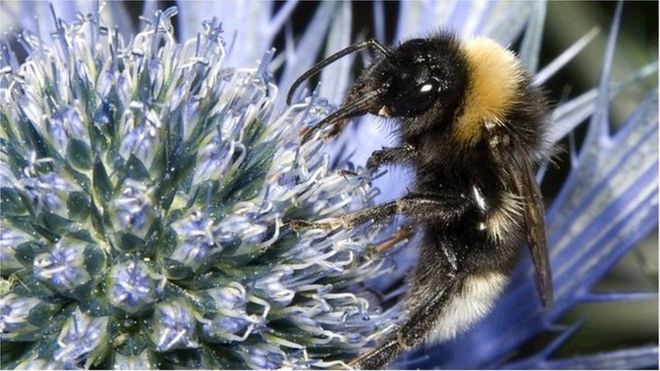
| A bee will be weaker and vulnerable to parasites as a result of pesticides exposure. Source: http://ichef.bbci.co.uk/news/660/cpsprodpb/B973/production/_92657474_mediaitem84448047.jpg |
Based
on an article with the same title posted by BBC on November 24, 2015
Neonicotinoid and Imidacloprid are kinds of
pesticide being assessed by Canadian health regulator or Health Canada after
finding those pesticide polluting waterways and killing beneficial insects and
aquatic animals. Thus, Health Canada has proposed a new regulation to ban the
use of those dangerous pesticides in the agricultural regions especially on
corn and canola crops. It involves citizens to give feedback about the proposal
for 90 days before Health Canada comes to final decision.
Murray Borer, a president of his regional beekeeper’s
association, believed that this new regulation was good news for all beekeepers
although it took too much time to be proposed. He suspected that those
pesticides were the main cause of the degradation in his business since the use
of pesticides made bees become weaker and vulnerable to some parasites. The case
actually has happened since 2012 when there were a lot of bees dying due to
neonicotinoid use in Quebec and Ontario. Health Canada has been trying to
re-evaluate the pesticides since then.
I agree with the initiative conducted by Health
Canada. Indeed, the use of pesticides has brought both advantages and
disadvantages to environment. It helps farmers to keep the crops. On the other
hand, it kills a lot of animals and even contaminates the environment. Human
also gets the effect of the excessive use of pesticides as it will influence
human’s health. Regardless of that good step, I think Health Canada should find
another alternative which is environmentally friendly for farmers to keep their
crops when the regulation is officially applied.

No comments:
Post a Comment